
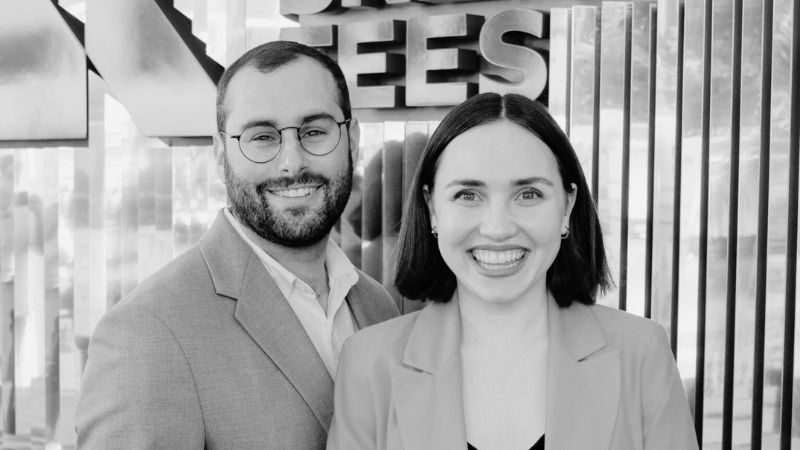
Die Kwiksilwers (The Quicksilvers) tells the story of four women who embark on an unscheduled road trip to witness a celestial event in the Northern Cape Town of Sutherland. Led by Lida, whose 1975 Ford Granada becomes their escape pod, the hilarity ensues as these woman make their great escape trying to stay one step ahead of an overprotective relative as they make their way through the Karoo in South Africa. Spearheaded by producer-writer and writer-director team, Gabriella Blumberg and Jordy Sank, reviewmyscript.com caught up with the Sanktuary Films team to find out more about the writing process.
How did you start working together and come to be involved in this specific project?
Jordy: So, yeah, so it really all started with… Gabriella had just finished a master’s in the UK and she came back to Johannesburg and we met for a coffee and I was also freshly out of a job in commercials. And I had this documentary bubbling in the background and I said to Gabi, what do you know about producing? And she said, absolutely nothing. And I said, great, we’ll figure it out together. And ever since then, we’ve been producing each other’s work and working on films together and it’s just been the most wonderful collaboration.
Gabriella: Our first film together was a Holocaust documentary called I Am Here. And we released it in 2021 and it was quite remarkable because it was our first project. We really were just passionate about it and we just tried to get it out as much as possible and it did really well in South Africa. It won some SAFTAs and was sold internationally. But Jordi and I both also wanted to get into fiction films and we still love documentaries and what’s interesting with the work that we do at Sanktuary Films is we work across genre.
I wanted to find out from you, does comedy writing come easily to you? And what were some of the inspirations for this film?
Jordy: I think one thing that we just figured out in the writing is that comedy is actually a lot harder to write than drama. And it’s actually so interesting playing the film to different audiences, like playing the film to like a Silwerskermfees audience, versus a Joburg Film Festival audience. There were laughs, but a lot of the time there were a lot of the times there were different points. So I think comedy is very, very segmented and tough. Yeah, it’s tough to get everyone at the same point. One of the things that we really love is that pairing of the comedy with, with that heartfelt element and with the drama. You see it a lot in Taika Waititi’s films, like Jojo Rabbit, Hunt for the Wilderpeople. The drama is so much more enhanced when the audience is able to laugh and let their guard down a little bit. And then when something very dramatic or emotional happens, it really hits you in the feels because you’ve been a little vulnerable, laughing. So I think that those are the type of comedy films that we really gravitate to and like. And I think also just culturally in both of our Jewish heritages, I think laughing at pain and comedy is just kind of like inherent in, it’s almost like a part of the culture. So it’s something that we’ve always kind of gravitated to, willingly or not.
Gabriella: And I think we, Jordy and I co-wrote this with Marisa van Eerden, who’s a very strong comedy writer. And so it was, when we were workshopping this, it’s also about having input. And I think it’s also really important understanding culturally what works and what is authentic. So we were very aware going into writing an Afrikaans film that at the end of the day is actually about family and grief and friendships, that things need to feel culturally authentic and accurate. So there was a lot of research that went into how the son addresses mother, what type of language people use. So I think that was really important for us to have Marisa on board. But then we also just had some fun when we were writing. We spoke to our different parents, friends who had been on road trips and got all of their stories. So some of the stories also inspired by people that we know who’ve done similar road trips and similar age groups. So we’re always looking for real inspiration from everyday life, getting real people’s stories, and obviously using our film knowledge to dramatise and to structure it. And then having that level of kind of cultural authenticity. Yeah, that all really does come through.
I wanted to find out about the collaborative process of actually co-writing the script, because you guys have worked on a few projects already. And I also wanted to find out if the story had evolved during the development.
Jordy: Yeah, it feels like so long ago, but there were definitely a lot of changes. And then we actually pulled also a lot of writers to come in just for like a day workshop, just to help us workshop different ideas and get that kind of ironed out. And we were very, very open to letting the story be malleable to what it needed to be.
Gabriella: Yeah, I think a difficult thing was actually dropping stories, because we were so, like in some of the writers rooms, or when we were doing research, we pulled together all these hilarious roads of stories, and what happens if this happens to them, or what happens if they make this decision, and they take that path. But then there comes the difficult point when you have to think really, how does this help, like our character arc? And we had first just like a big, short synopsis, then we had like a beginning, middle and end, then we actually had the story beats, then we actually wrote the script, then we rewrote the script, then we rewrote the script. When we were in the edit, I would say we stayed quite true to what we had shot. And I think that’s mainly due to the amount of planning that we had to do, because with a South African film with quite a contained budget… we could only shoot for 17 days. And it was quite an ambitious project for quite a small budget. So we really had to be very, very strategic… we knew we couldn’t like just film extra scenes and then see if they worked in the edit or not. So we really were, did a lot of thinking and planning. And I mean, you should do that even if you do have a limitless budget. But I think when we got into the edit, we actually, I think, had already seen the film in our mind from the script stage. And we’re also on the same page of what the edit would look like. And we also work with Esther Badenhorst, who’s been our editor on all of our films, from our documentaries to our shorts. And she also was actually on set with us. So she also really knew the footage, knew the story inside out. So by the time we got to the editing, and because we’d also shot at Filmscape, we also knew that we wouldn’t be able to like reshoot scenes.
Jordy: There were only little moments or like some dialogue here and there that was maybe taken out.
Gabriella: And I think what’s always interesting about being in the edit also is the how music and sound design really just brings a whole new element. And, you know, you think you have a film and then you listen to it with the music and you can never visualise what it was like without it. Edward George King was our composer. Again, we’ve worked with him on all of our films. So which moments are we actually not going to have music and just let the dialogue play and really trusting the audience and not spoon-feeding them. But it can be really hard when you’re working with such a talented composer. You want to just put every piece that they’ve composed into the film because it’s so strong. And then you have to be quite objective and say, “okay, only put music where it’s absolutely necessary.”