
The entertainment industry is standing at a profound digital crossroads. With generative AI deeply embedded in modern creative workflows, a question that once belonged strictly to sci-fi has entered real-world production offices: Can, and should an AI write a feature screenplay from scratch?
While the temptation to hit “generate” and receive a 120-page script in seconds is a tempting shortcut for cash-strapped producers, the reality of AI screenwriting reveals a massive divide between syntax and soul. Here’s a closer look at the creative, practical, and legal realities of treating AI as an originator versus a collaborator.
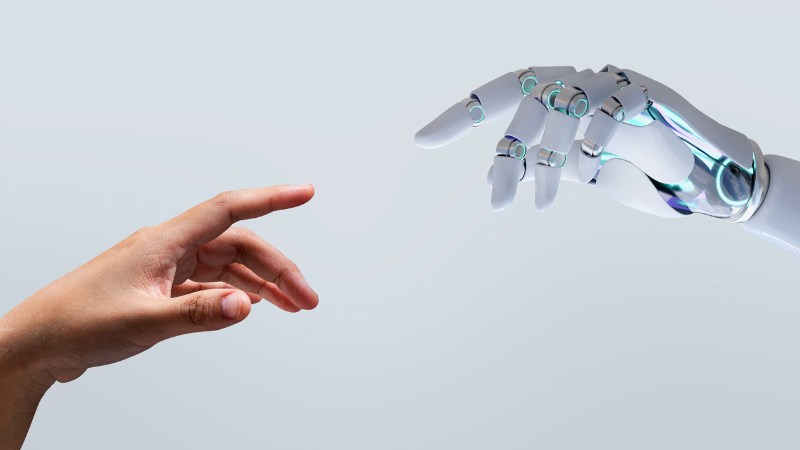
The Cons: Why AI Fails as an Originator
When you prompt an AI with writing a script from scratch, you aren’t getting a bold new cinematic voice; you’re getting a mathematical average of everything that has come before.
1. The Death of “Human Texture”
Great screenwriting rarely lives in the literal meanings of the words on the page. It thrives in subtext, unspoken tension and the messy contradictions of human nature.
Because AI lacks lived experience, it cannot replicate human texture. AI doesn’t know what it feels like to have a broken heart, to sweat from anxiety or to laugh to keep from crying. Consequently, AI-generated dialogue tends to be overly expository and literal. It misses the erratic rhythms of human speech – the quirky idioms, the meaningful silences and the psychological vulnerability that actors look for and audiences connect with.
2. The Algorithmic Echo Chamber
Generative models don’t create from genuine inspiration; they predict based on probability. By processing many, many existing scripts, the AI learns what a traditional screenplay “looks like”.
The Originality Trap: Because the machine relies entirely on existing data, it inherently diminishes true creativity and originality.
Instead of inventing something fresh, an AI optimises for the predictable norm. It recycles structural tropes, flattens character arcs into formulaic beats, and leans heavily on clichés. If a system only knows what has already been written, it cannot genuinely innovate or break the rules in a way that feels revolutionary or avant-garde.
3. The Legal and Copyright Minefield
Beyond the artistic arguments lie massive, unresolved legal issues surrounding ownership and usage.
The Authorship Hurdle: Copyright offices globally maintain that copyright protections only extend to works of human authorship. A script generated from scratch by an AI may instantly fall into the public domain, making it a worthless asset for a studio that relies on exclusive intellectual property.
Chain of Title Disruption: Because AI models are trained on vast datasets of potentially copyrighted screenplays without explicit consent, using a pure AI script risks copyright infringement lawsuits. For a production company, the lack of a clean “chain of title” is a financial non-starter.
The Pros: Where AI Actually Shines
Despite these massive hurdles, AI isn’t a villain to the screenwriting community – provided it stays in its proper lane. The true power of AI is not creation, but iteration and administration.
How to Pivot from “Originator” to “Assistant”
Instead of forcing an AI to act as the primary creator, writers and producers unlock its true value by treating it as a digital sparring partner.
Where AI Fails as an Originator: Writing complete scenes, inventing complex, emotionally rich characters and deciding the thematic core of a series.
Where AI Triumphs as an Assistant: Breaking writer’s block by generating 20 wild twist ideas, formatting sluglines, tracking character screen-time, proofreading and brainstorming loglines or pitch deck summaries.
The Verdict: The Assistant vs. The Originator
Ultimately, the blueprint for the future of entertainment is clear: It’s far better to use AI as a writing assistant than an originator when it comes to producing series or film scripts.
Think of AI as an incredibly fast, infinitely patient intern. It’s brilliant for summarising executive notes, researching historical periods, organizing outlines, or offering a springboard when you hit a creative wall. It can help you organize your thoughts but it should never do the thinking for you.
The scripts that define generations – the ones that make us weep in a dark theatre or binge a series until dawn – require an authentic human heartbeat behind the keyboard. Use the technology to sharpen your tools, but leave the storytelling to the storyteller.