
Pablo Larraín is carving out a niche for himself. Somber and dramatic character-pieces about women beloved by the public, who were struck by tragedy. In his latest film, Spencer, in theatres now, that tragedy is personal, as we see Princess Diana’s burdensome inner world, rendered all the more tragic knowing what we know now about how things are going to end. Once you become a royal, life flattens into a dirge, and Kirsten Stewart mesmerizes as the people’s princess. Before this, Larraín worked with Noah Oppenheim (primarily a journalist) to depict a woman with a similar cultural standing; Jackie Kennedy, for what he described as an “anti-biopic”.
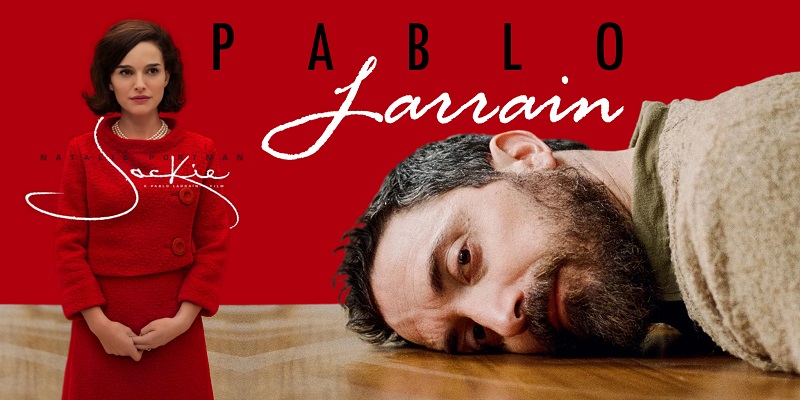
The style comes down to skirting the traditional cradle-to-grave biopic, in favor of capturing a moment in the life of an icon, a boiling point which pushed them and reveals to us something greater, and which stands for the broader picture of who they are. Larraín’s aim is not to depict someone as they were, but to depict the emotional milieu which surrounded them (and through which we define their life today), and in so doing recontextualize our view of their lives as a story, by emphasizing their humanity. That humanity was key for Jackie, and Larraín requested multiple revisions to further emphasize its presence in Jackie Kennedy in every scene possible. The result is a framing of Kennedy as the devastated mother of America during an indescribably traumatic time. She (and indeed, Diana) led a life that was impenetrably singular. How do you communicate an experience that no-one else has ever lived through?
For Oppenheim and Larraín, the key was in discovering the origin of America’s ‘Camelot’ mythology. Camelot was a hugely popular musical during the Kennedy administration, a King Arthur adaptation that stresses the transient but glorious nature of Camelot during its most famous song. The Kennedys loved the show, and for Americans it has become inextricably tied to their time in the White House. What took Oppenheim by surprise was that Mrs. Kennedy herself had originated this allegory in an interview given one week after her husband’s assassination.
As Oppenheim put it: “she had the presence of mind to recognize that this is her last chance to define how her husband will be remembered” amidst the chaos, beset upon by media and administrators, facing having to leave her home and provide for her children and as she processed the trauma of witnessing her husband die in front of her. “Don’t let it be forgot, that once there was a spot, for one brief shining moment, that was known as Camelot… there’ll be great Presidents again… but there’ll never be another Camelot again.”
Up to the last, Jackie was fighting to define who her husband was as President and man for an American public that was deeply unprepared to face a world of Cold Wars, assassinations, and rapid social change. Despite what happened to her, she played a greater hand in shaping our narrative about her life than we might have thought. A biography is a slippery thing, but Larraín has a gift for this sort of film because his fantastic understanding of one time in his subjects’ lives brings an immediacy that is often lacking in the genre. By zeroing in this way, he produces films that, had they been works of fiction detached from any real-world subject, would remain must-watches. Rather than relying on an audiences’ interest in an icon’s formation or those aspects that were kept from the public’s view to sustain involvement, square with who they were, what they mean to the world, and find a moment. That moment in time that best captured them.