
Every screenwriting forum, introductory textbook and competition feedback form repeats the same golden rule: Never include camera directions in a spec script.
You are told that writing ANGLE ON, CLOSE-UP or PAN TO is the fastest way to mark yourself as an amateur. The logic sounds straightforward: directing is the director’s job, framing is the cinematographer’s domain and your job is strictly story, dialogue, and action.
Yet, when you read production drafts from Walter Hill, the Coen Brothers or Quentin Tarantino, technical direction appears all over the page.
So what gives? Is writing camera angles truly a fatal flaw or is the reality more nuanced?
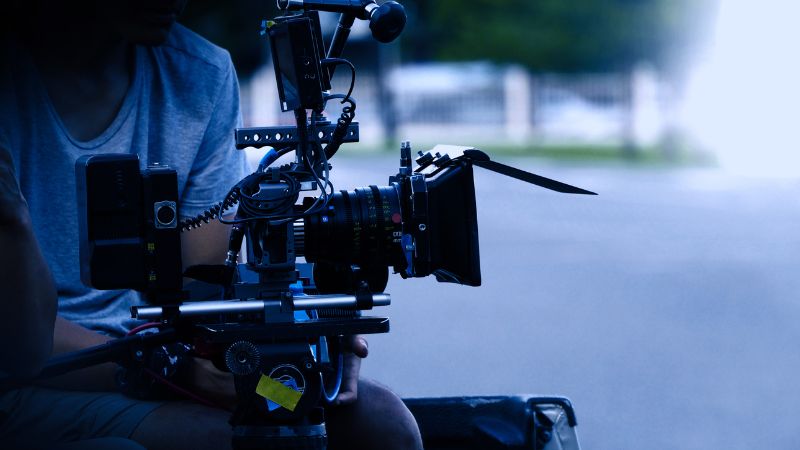
The Spec Script vs. The Shooting Script
To understand where this rule comes from, you have to distinguish between the two lives of a screenplay:
The Spec Script (Reading Draft): Written to be sold, optioned or used as a calling card. Its sole objective is to provide a seamless, cinematic reading experience. It sells an emotional journey, tone and pacing to readers, managers and producers.
The Shooting Script (Production Draft): An operational blue-collar document. It has scene numbers, locked pages and explicit camera angles because the crew needs it to budget days, order lenses and plan coverage.
When you pepper a spec script with technical commands, you disrupt the reading flow. Every time a reader hits CAMERA PULLS BACK TO REVEAL, they are ripped out of the fictional world and reminded of a lens on a tripod. That mechanical friction is what frustrates script readers.
Directing the Eye: The Invisible Technique
Cinema is visual. You still need to dictate what the audience sees, when they see it and how long they look at it. A writer who avoids directing altogether leaves scenes flat, generic and unguided.
The professional solution isn’t to stop directing; it’s to direct invisibly. You control the camera through paragraph structure, white space and visual pacing.
The core principle: What gets its own line gets the lens.
1. The Implied Close-Up
If a character notices a hidden clue, you do not need INSERT: BLOODY ENVELOPE. Simply isolate the detail in its own short line of action.
The Mechanical Way:
John walks into the office. CLOSE UP ON THE DESK. A bloody envelope sits near the blotter.
The Invisible Way:
John steps into the quiet office.
On the desk, half-hidden beneath the blotter: a bloody envelope.
Because the envelope receives its own dedicated line, the reader’s internal projector naturally zooms in. You achieved a close-up without typing a single technical term.
2. The Implied Tracking Shot or Reveal
Movement can be baked into syntax. Active verbs combined with directional flow create the sensation of a camera tracking with a subject or sweeping across an environment.
The Mechanical Way:
CAMERA TRACKS WITH Marcus as he runs through the alley. PAN TO the fire escape where a shadow drops down.
The Invisible Way:
Marcus sprints down the wet brick corridor.
Above him, the iron fire escape rattles.
A shadow drops into his path.
The narrative eye moves smoothly from ground level to vertical height, then crashes down into the frame. The spatial choreography is clear, but the reading velocity never falters.
3. The Pacing Cut (Micro-Scenes)
Camera cuts dictate rhythm. In a shootout or high-tension scene, short, staccato action lines mimic rapid, handheld cuts. For a slow, atmospheric establishing shot, a longer, sensory paragraph replicates a slow, sweeping wide shot.
Rapid Cut Example:
Glass shatters.
Elena dives behind the mahogany bar.
Wood splinters above her ear.
Two shells hit the linoleum. Empty.
Each isolated beat acts as a cut point. The editor’s shears and the director’s shot list are embedded directly into the line breaks.
When Are Explicit Camera Directions Actually Acceptable?
Rules in screenwriting are practical guidelines rather than legal statutes. You can break them if the story demands it, provided you follow two rules:
Clarity Requires It: If a visual gag or critical story beat cannot be communicated clearly without specifying a perspective (e.g., establishing a character’s strictly limited point of view through binoculars or a security monitor).
Sparse Usage: If a script uses WE SEE or ANGLE ON twice in 100 pages to nail a vital, high-stakes reveal, no reader will penalise it. Problems arise only when technical jargon replaces vivid, active prose on every page.
Stop thinking about where to place the camera. Think about where you want the reader’s eyes to land.
Mastering formatting is about using grammar, line breaks, and descriptive economy to build a lens inside the reader’s imagination. When the visual rhythm lives in the prose itself, the camera takes care of itself.