
Whether he’s haunting you as a notorious serial killer or inducing a “cringe” as a misguided office manager, Albert Pretorius is an actor who doesn’t just inhabit a role – he lives it.
A true contender on stage and screen, Pretorius possesses a chameleon-like ability to pivot between the Shakespearean gravity of Iago and the mockumentary nuance of Die Kantoor without ever losing his footing. He is an actor’s actor, the kind of talent who treats the script like a crime scene, digging through the text until he finds the “truth in the lie.”

In this insightful conversation, we discuss the “lonely game” of learning lines at 5am, the weight of stepping into a global comedy legacy, and why he’s perfectly content to leave the dust of his characters at the stage door.
Every time I see you on screen you deliver. How do you prepare? What is your secret?
I don’t have a secret! Everyone asks how I remember the lines. Because I do a lot of theatre – I played Iago recently – you just have to sit on your ass and learn the lines. I trust my first read instinct. The feeling I get for the character when I read a script for the first time – I listen to that and build on it. The really interesting texts are the ones where, on the first read, you’re like, “I don’t know what to make of this.” That’s when the digging starts. It’s a very lonely game of breaking down scenes and memorizing.
Do you have a routine to get into the zone?
I like to do it in the morning. I’ll get up sometimes at 5am or something and then I’ll put in a nice two or three-hour session… by eight o’clock, I feel like I’ve done my work for the day and then all that stuff just lingers. I need at least two nights to sleep on words for them to really set. I envy these guys like James Spader who have a photographic memory.
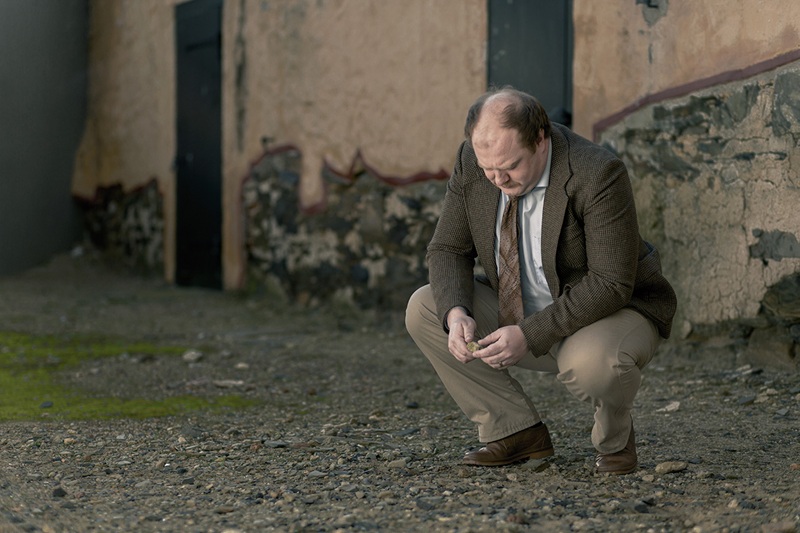
Have you ever encountered a character that was difficult to empathise with? One you actively fought against?
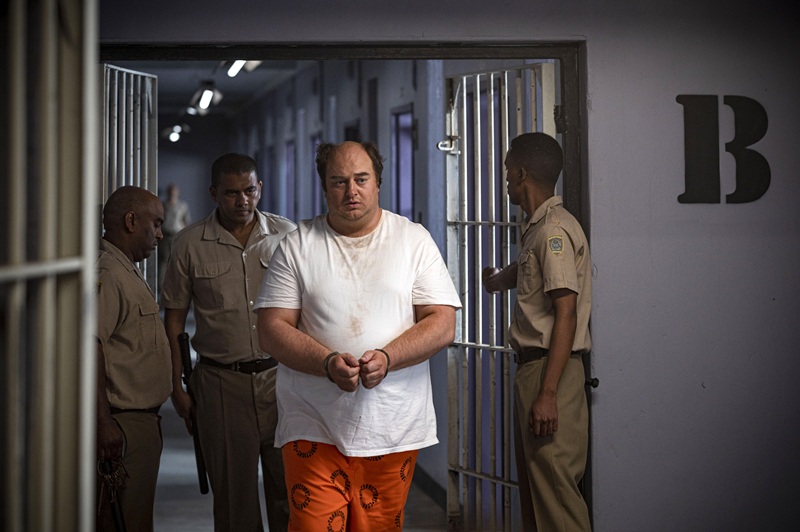
No, I quite like to lean into those. One of the first rules you learn in acting school is never judge your character. I find the complexities of those guys interesting. Yes, some are harder than others – Boetie Boer was not easy. You have to find what kind of sense he made of why he did what he did. You lie to yourself as he would lie to himself. I find those challenges really exciting. I think I would actually struggle more to play a plain romantic lead – boy meets girl. I like it a bit darker… there’s something about the darker characters where you really question stuff in your humanity.
So there was obviously a lot of improv allowed on Die Kantoor?
It’s actually much more structured than you think. The comedy works because the heart of the show lies in the structure; you need the payoff at the end. Bennie [the director] would come in and say, “I just need that line clear because two scenes from now, that line has an impact. You can improvise, but get that line out first.” He went to Second City in America, so he really knows that dynamic. He just gave us time to play.
You’re playing a role that is internationally recognized. Did you feel a lot of pressure taking on such a revered franchise?
I was very scared. You don’t want to mess up one of the greatest comedy franchises ever. I questioned why we were doing it now – 25 years later. What can we add? …Bennie gave me such a great answer: “I would be very upset if I sit on my couch and I watch it and someone else messed it up. If it’s a flop, let me be the one to mess it up.” And I had the same exact thing.
Flip feels designed for a South African context…
I specifically, when I heard [I had the role], I didn’t touch any material because I didn’t want any mannerisms. But the style – the costume, the looking at the camera – it just happens. I didn’t want to give a slow look to camera, but it happened. And you’re like, “Sh*t, was it too much Brent?” And I’m like, “No, it’s just the style.”
You’ve played incredibly dark roles. How do you protect your own mental space?
I’m quite good at leaving it. As David Mamet once wrote: “Leave the dust of the street outside the theatre, and leave the theatre at the door when you leave again.” I don’t want any residue. The less people know about you personally, the more they believe you are the character. I love this dual-sided illusion. Film is the biggest lie told to reveal some truth. You need the “lie” of the camera and the edit to tell the truth better.
Is there another talent you’d love to pursue? Producing? Directing?
I’m stuck with this. I’ve written two plays and realized it’s not my strength. In my head, it was profound; on paper, it was cliché. I’m not a wordsmith. I’m good with text breakdowns, though. I like to know exactly where I am in the script because we don’t shoot in order. I use the continuity person a lot.
For me, the best advice for screenwriting is: Whatever works. If it works, it works. Don’t get caught up with the rules.
What annoys me now is people pitching for Netflix and the feedback is “make it more second-screen friendly.” It kills me.
What’s the best acting advice you’ve ever received?
It was a lecturer in my second year during a production of ‘The Seagull’. She said: Detail is the hallmark of anything worthwhile. Work as detailed as you possibly can.