
Transitioning personal history into a compelling screenplay requires a delicate balance of emotional truth, structural mechanics and ethical boundary-setting. In her feature film Black Burns Fast, writer-director Sandulela Asanda tackled the insular world of South African boarding schools, turning personal memories and research into a character-driven romance comedy drama.

For screenwriters looking to adapt real life, construct complex protagonists or refine dialogue during production, Asanda offers a case study in how to navigate the page-to-screen journey.
Subverting the Formula
Rather than relying on familiar coming-of-age tropes, Asanda approached the screenplay for Black Burns Fast through a speculative, retrospective lens. Having attended a private boarding school herself without fully navigating her sexual identity at the time, she used the writing process to explore a “what if” scenario for her protagonist, Luthando.
“I think I was just more writing it from a place like if I had known back then or had been like thinking about these things back then, how would it have gone knowing everything that I know about not just my school, but other schools,” Asanda explains.
To build internal tension, Asanda focused on the distinct societal and institutional pressures layered onto young Black women in mostly-white spaces, using an underlying thematic metaphor to ground Luthando’s character arc.
“What I was speaking to a lot about like Luthando’s journey… is all these expectations that she’s kind of lived for her entire life… and how I feel it’s so emblematic of what it means to be a young Black girl in that you are forced to grow up faster because you have to be so hyper-vigilant of everything you do,” says Asanda. “I thought of like that concept in science… which is that how like darker colours heat up faster than other colours. So it’s also like for being a Black girl, also things heat up for you faster.”
Navigating the Ethics of Semi-Autobiographical Writing
When writing stories set in environments from a writer’s past, a common hurdle is determining how closely to mirror real-life individuals and events without compromising narrative structure or personal relationships. Asanda incorporated extensive research alongside her own memories, creating composite characters and narrative distance for safety.
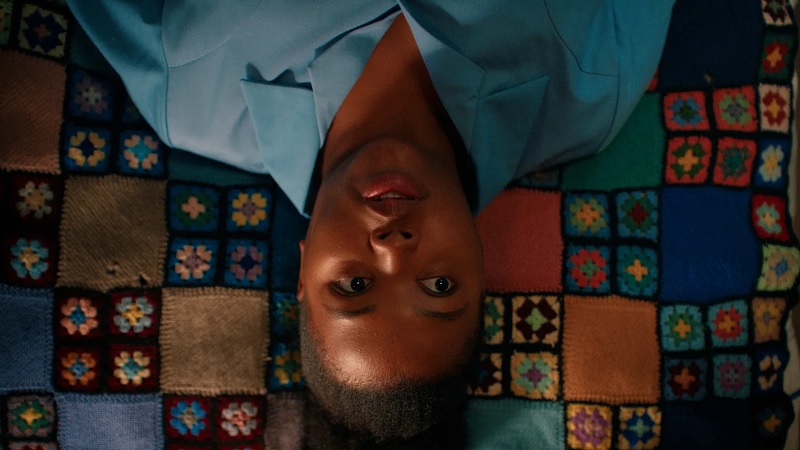
“I have created enough distance for deniability,” Asanda notes. “It’s walking that tightrope, I think.”
However, when a real-life event was too visually or emotionally striking to alter, Asanda chose to keep the specific beat intact- while taking the essential step of seeking consent from those involved before locking the draft.
“There is one like incident that I did take like as it happened, and I called… the person who was involved to say like, ‘Hey, I’m writing this film about high school and stuff, and I want to write about this thing that happened to you,'” Asanda shares. “So basically what happened to Anele, very similar… we were in grade 9, and she was dating an older guy who had a car, and we were walking out of the library and we had caught him out like at night in his car with another student. So like that I took bar-for-bar because it was such a distinct memory of mine of that time… but I made sure that I got the permission from the person before I did it.”
Refining Dialogue in Rehearsal
A screenplay is ultimately a blueprinted score for performers, and Asanda treats dialogue as an evolving element as part of script development. During the pre-production and rehearsal phases, she listens closely to how written lines sit in an actor’s mouth, distinguishing between a performer missing a beat and a line that simply lacks conversational authenticity.
“Even from like the rehearsal process, for me it’s very much about like what sounds right in like the performer’s mouth,” Asanda explains. “If I’m hearing them and like they’re struggling with the line, but not in a way that they don’t know it… I can just hear it doesn’t fit well. And then I’ll say, ‘Okay, cool. Let’s work together to find a different word or a different way to get like this idea across.'”

When it comes to maintaining script discipline versus allowing on-set improvisation, Asanda advises writers and directors to tailor their approach to the experience level of the cast like she did on Black Burns Fast.
“Am I a fan of improvisation? Yes and no. I think it also depends on the performer, because a lot of performers-it throws them off,” Asanda says. “I think the only person I really just like let off the cuff was Rob, and that’s because I knew he had that experience that he could do it. But yeah, otherwise we kept quite close to the script unless there was like a word here or there that wasn’t like flowing properly.”