
Every screenwriter has a “mountain script.” It’s the sprawling, four-quadrant sci-fi epic, the multi-generational family tragedy or the genre-bending thriller that has lived rent-free in your head for three years. You open your script editing software, stare at the blank expanse of page 12, tweak the logline for the four-hundredth time, and freeze. The sheer mass of the project causes paralysis.
You risk spending half a decade in a creative bunker, emerging with a single 110-page PDF that has zero audience, an unverified concept and no tangible chain of title.
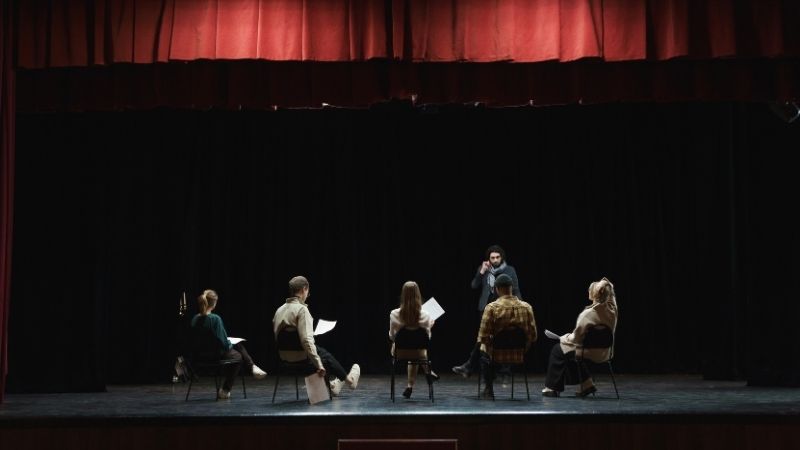
The most productive screenwriters do not march blindly up the mountain – they build an ecosystem. By fracturing your grand vision into high-leverage, standalone satellite projects – specifically short films, stage plays and audio dramas – you transform an intimidating writing chore into an active, self-validating career engine.
1. The Psychology of Bite-Sized Wins
Mountain scripts invite executive dysfunction… meaning when a project feels monumental, every narrative misstep feels like structural collapse.
Spinning off a singular scene, an isolated character origin or a self-contained thematic premise into an 10-page short or a 42-minute audio drama script tricks your psychology into high gear:
Lower Stakes, Higher Risk-Taking: A short allows you to experiment with unconventional pacing, weird tonal balance or unreliable narration without risking six months of work.
The Completion High: Finishing scripts creates dopamine. A writer who finishes three 10-page companion pieces in six weeks builds real developmental momentum. You return to the feature draft not as an aspiring dreamer, but as a writer who has repeatedly crossed the finish line.
2. Fortifying Your Chain of Title: Copyright Through Execution
Ideas are legally valueless. You cannot copyright a concept, an aesthetic, a world rule or a premise – only the concrete expression of one. Pitching a grand, unproduced feature logline to casual acquaintances or entering it into public pitch fests leaves you exposed to the messy gray zone of “parallel development.”
Producing smaller spin-offs establishes an undeniable, timestamped paper trail:
Public Prior Art: Producing a self-contained 12-minute short film or publishing an audio drama creates a public, copyrighted piece of finished intellectual property.
Chain of Title: If your feature script is built on the world or characters first manifested in your produced micro-budget project, your ownership is airtight. You are no longer pitching an abstract idea; you are pitching the adaptation or expansion of your own existing IP.
3. The Litmus Test: Refining the Core Before Page 90
Too many screenwriters send a feature out for script coverage, only to discover on page 75 that their protagonist’s central flaw is fundamentally unlikable or their magic system collapses under dramatic scrutiny. Fixing that in a feature requires a catastrophic page-one rewrite.
Intermediary mediums act as cheap, hyper-effective wind tunnels:
The Short Film as Proof-of-Concept: Damien Chazelle famously pulled the intense “rushing or dragging” studio rehearsal scene out of his Whiplash feature script and directed it as an 18-minute short. It swept Sundance, demonstrated that drumming could carry the tension of a psychological thriller, and unlocked the feature budget.
Tonal Stress-Testing: If your premise doesn’t evoke tension, laughter, or dread within an eight-minute runtime, it will not suddenly start working across two hours. The short forces you to locate the absolute emotional heartbeat of the story.
4. The Audio Drama & Stage Play
Spectacle hides bad writing; acoustic mediums expose it instantly. If your sprawling feature relies on massive set pieces to disguise thin character motivations, you will learn that immediately by stripping the visuals away.
Audio Fiction & Podcasts
Writing a three-episode audio drama set in the periphery of your feature’s world forces you to master auditory subtext, dialogue rhythm, and spatial economy.
Every character must have an unmistakably distinct vocal signature, because the listener cannot rely on casting appearance to tell them apart.
An audio drama requires near-zero physical production overhead to record, publish, and distribute globally on podcast networks, providing instant audience metrics.
One-Act Plays
A 15-minute two-hander play set in a single room forces pure dramatic conflict. Without camera angles, musical stings or editing cuts to bail you out, the narrative engine rests entirely on objective, obstacle and tactic. If you can keep an audience locked into two characters talking around a table, your feature script’s dialogue will crackle with genuine friction.
5. Audience Building
Hollywood hates risk. An unknown writer walking into a room with a 120-page spec script is an unmitigated liability.
An unknown writer who walks into a room and says, “Here is my feature pitch; it is an expansion of this short film that has 400,000 views on YouTube, won three regional festivals, and has an accompanying six-part audio drama with 15,000 monthly listeners” is an entirely different proposition.
You are presenting an audience that has already pre-bought the tone. You have turned an unproven script into a de-risked franchise property.
6. Proving Medium Versatility
The modern entertainment ecosystem does not reward the one-trick scribe. Studios, streamers, and production companies are IP managers looking for creative partners who understand transmedia worldbuilding.
When your portfolio shows you can write a tight, visually striking short script, direct actors in a low-budget environment, and script tight audio narratives, you signal technical dexterity. You prove that you understand production constraints, actor communication, and sound design.
A body of diverse, completed work signals that you finish what you start.
Building the Satellite: The Action Plan
Do not put your mountain script away. Instead, extract a fragment from it this week:
Isolate a Single Narrative Nerve: Find the scene in Act II that scares you most, the backstory incident your villain only references in passing, or a self-contained moral dilemma faced by an ancillary character.
Select the Medium:
If it demands visual claustrophobia, write it as a 7-page short.
If it hinges on a tense verbal interrogation, write it as an audio monologue or a two-person stage scene.
Execute to Completion: Write it, polish it, and produce or stage it with local actors, sound designers, or indie filmmakers.
Stop treating your masterwork as a fragile monolith that must be carved in total secrecy. Surround it with living, finished, standalone creations. When you finally arrive at page 110 of the main feature, you will not be introducing a foreign story to an indifferent world – you will be crowning an empire you’ve already built.