
Stephen “Spling” Aspeling has spent years analysing what makes stories work from the critic’s chair and as a trusted script editor for ReviewMyScript.com. But recently, the industry veteran stepped into the spotlight himself, clinching a top prize in SAfm’s prestigious, anonymously judged national scriptwriting competition for his original psychological thriller, Close to Home.
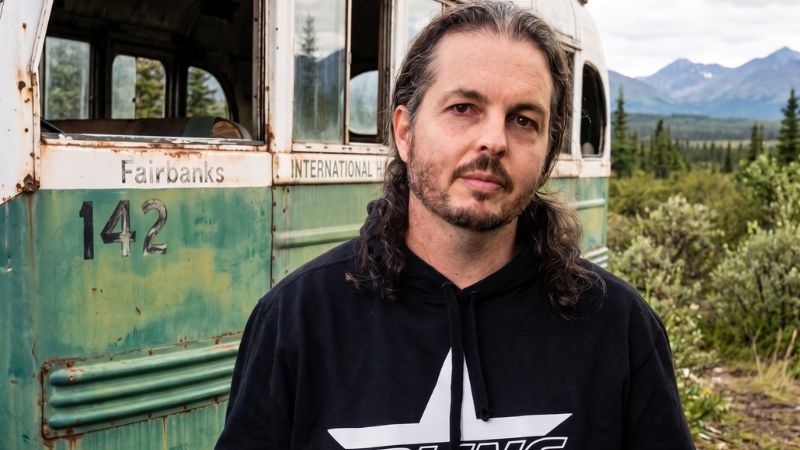
With the audio drama set to premiere on SAfm at 21h00 on June 27th and a high-calibre short film adaptation heading to the festival circuit, Spling sat down to discuss the architecture of a scalable script, the influence of indie giants like A24, and how screenwriters can masterfully manufacture their own luck.
The Blind Audition and the Micro-Budget Blueprint
You’ve spent years deconstructing other people’s scripts. What did it feel like to have your own original work validated on a national level – especially through an anonymous judging process?
Winning a top prize in SAfm’s national scriptwriting competition for Close to Home was a massive moment because it’s judged entirely anonymously, it strips away any industry bias, politics or past credentials. It serves as pure validation of the story itself.
I’ve been a script editor for several years with ReviewMyScript.com… so winning a top prize for my original psychological thriller ‘Close to Home’ was a real moment.
Close to Home was uniquely designed to function across multiple mediums. Can you talk about the strategy behind writing a script that works just as well in an audio-only format as it does on a cinema screen?
It’s all about scalability and keeping things nimble. I wrote it as a scalable film concept with a view to it being adapted into a radio play. Think of Locke starring Tom Hardy. If a story can hold an audience’s attention as a taut audio drama relying entirely on sound, dialogue, and pacing, then adding visuals and live-action performance can only enhance what’s already fundamentally working.
By stripping the concept down to its core psychological tension, it becomes incredibly budget-flexible. We can make this on any budget from R500k to R20m. Furthermore, it’s a frame that can travel – it can easily be transplanted into different countries around the world to create localized versions.
Aligning the Stars: Audio Premieres and Festival Proofs of Concept
It sounds like 2026 is shaping up to be a massive year for this project. How are the different iterations of Close to Home converging right now?
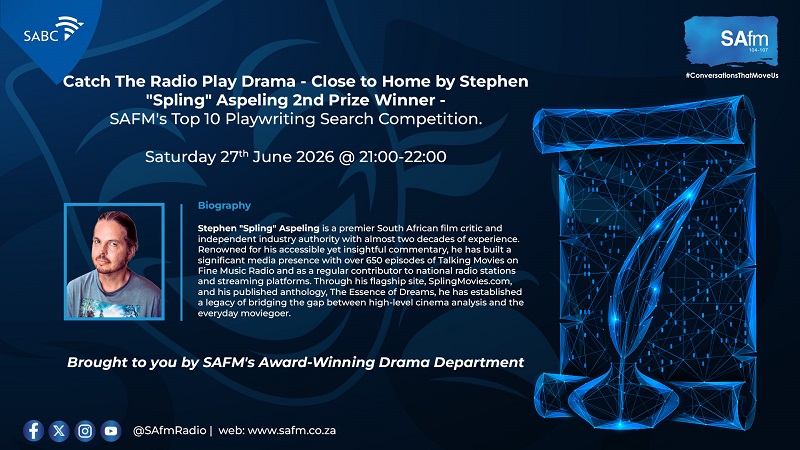
It really feels like the stars are aligning. As the produced radio play prepares for its premiere on 27 June, we’re simultaneously putting the finishing touches on the short film version, which we shot back in January. More details of this exciting project will follow as soon as we’ve got final cut.
The short film is a proof of concept. I think it works beautifully as a standalone product, but it also serves as a gateway into the much bigger world of the story. I’m hoping that with a little luck, grit, and determination, this short film adaptation earns its place in the world and ultimately leads to a full-feature SPL!NG film.
As a film critic, your taste leans toward distinct, atmosphere-driven cinema. Where do you see Close to Home fitting into the global market?
The film could definitely work within an A24 or Neon-type environment. It has that independent, high-tension spirit. But regardless of Hollywood backing, I intend to see it made independently, even if we don’t manage to attract major funding. I’ve written four produced short films now, but this is my first wholly original work. I’m excited to ply the full spectrum of everything I’ve learned as a film critic into this new chapter as a filmmaker.
A Call to Action for Producers and Writers
You’ve teased that the short film features some serious talent. What is your message to potential investors and collaborators reading this?
If any film producers, film fund managers, commissioning editors, festival organizers, or key decision-makers are reading this -please do reach out. I’d be more than happy to share a link to the latest cut of the short film, which features an internationally recognised actress. Right now, I’m just incredibly excited for the future of this story, which is only beginning its journey.
Finally, as a script editor for ReviewMyScript.com, what is your ultimate advice for budding screenwriters who are sitting on a great idea but don’t know how to get it made?
I’d encourage all budding screenwriters to just commit your idea to paper. It’s about making dreams a reality. Don’t look at the mountain all at once; break it down into manageable, doable steps until it starts to crystallize.
From that point, turn it into a short story, then into a short film script, then into a radio drama, then into a graphic novel… Not only will you cement your IP, you’ll get it into a marketable position.
Get enough people excited about your idea, build a solid team of collaborators and believers, and before you know it, it’ll start to happen.